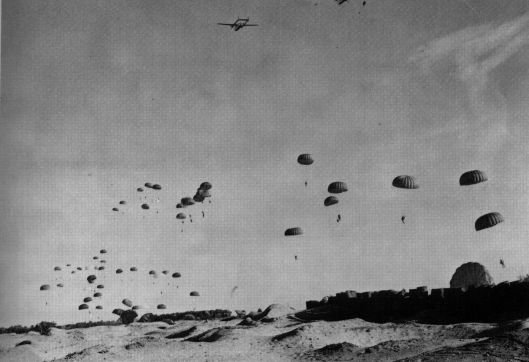
In 1955, Egyptian President Gamal Abdel Nasser began to import arms from the Soviet Bloc to build his arsenal for the confrontation with Israel. The escalation continued with the Egyptian blockade of the Straits of Tiran, and Nasser's nationalization of the Suez Canal in July 1956. Less than two weeks later, on October 25, Egypt signed a tripartite agreement with Syria and Jordan placing Nasser in command of all three armies.
The continued blockade of the Suez Canal and Gulf of Aqaba to Israeli shipping, combined with the increased fedayeen terrorist attacks and the bellicosity of recent Arab statements, prompted Israel, with the backing of Britain and France, to attack Egypt on October 29, 1956. The three nations agreed on a plan whereby Israel would land paratroopers near the canal and send its armor across the Sinai Desert. The British and French would then call for both sides to withdraw from the canal zone, fully expecting the Egyptians to refuse. At that point, British and French troops would be deployed to "protect" the canal.
When the decision was made to go to war in 1956, Israeli forces entered the Sinai desert and quickly advanced unopposed toward the Suez Canal before halting in compliance with the demands of England and France. As expected, the Egyptians ignored the Anglo-French ultimatum to withdraw since they, the "victims," were being asked to retreat from the Sinai to the west bank of the Canal while the Israelis were permitted to stay just 10 miles east of the Canal.
|
|
On October 30, the United States sponsored a Security Council resolution calling for an immediate Israeli withdrawal, but England and France vetoed it. The following day, the two allies launched air operations, bombing Egyptian airfields near Suez. The IDF's armored corps swept across the desert, capturing virtually the entire Sinai by November 5. That day, British and French paratroops landed near Port Said and amphibious ships dropped commandoes on shore. British troops captured Port Said and advanced to within 25 miles of Suez City before the British government abruptly agreed to a cease-fire. |
Though their allies had failed to accomplish their goals, the Israelis were satisfied at having reached theirs in an operation that took only 100 hours. U.S. pressure resulted in an Israeli withdrawal from the areas it conquered without obtaining any concessions from the Egyptians. This sowed the seeds of the 1967 war.
Here we present the campaign medals issued by all sides of the conflict. Israel knows no campaign medals only ribbons.
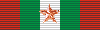
| Israel | Sinai Campaign ribbon |
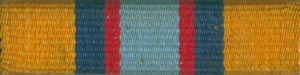 |
Awarded to: |
| United Kingdom | |
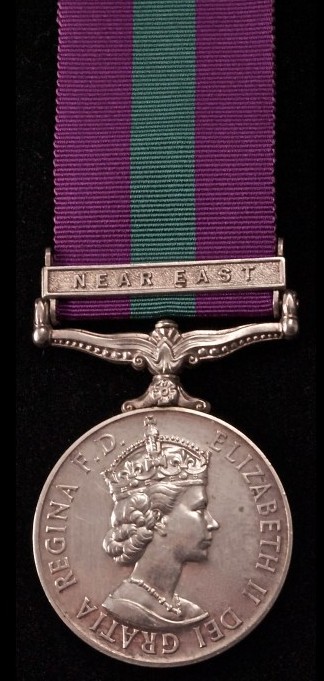 |
General Service Medal (1918-62) with clasp NEAR
EAST for service in the Middle East in the period 31 October to 22 December 1956. |
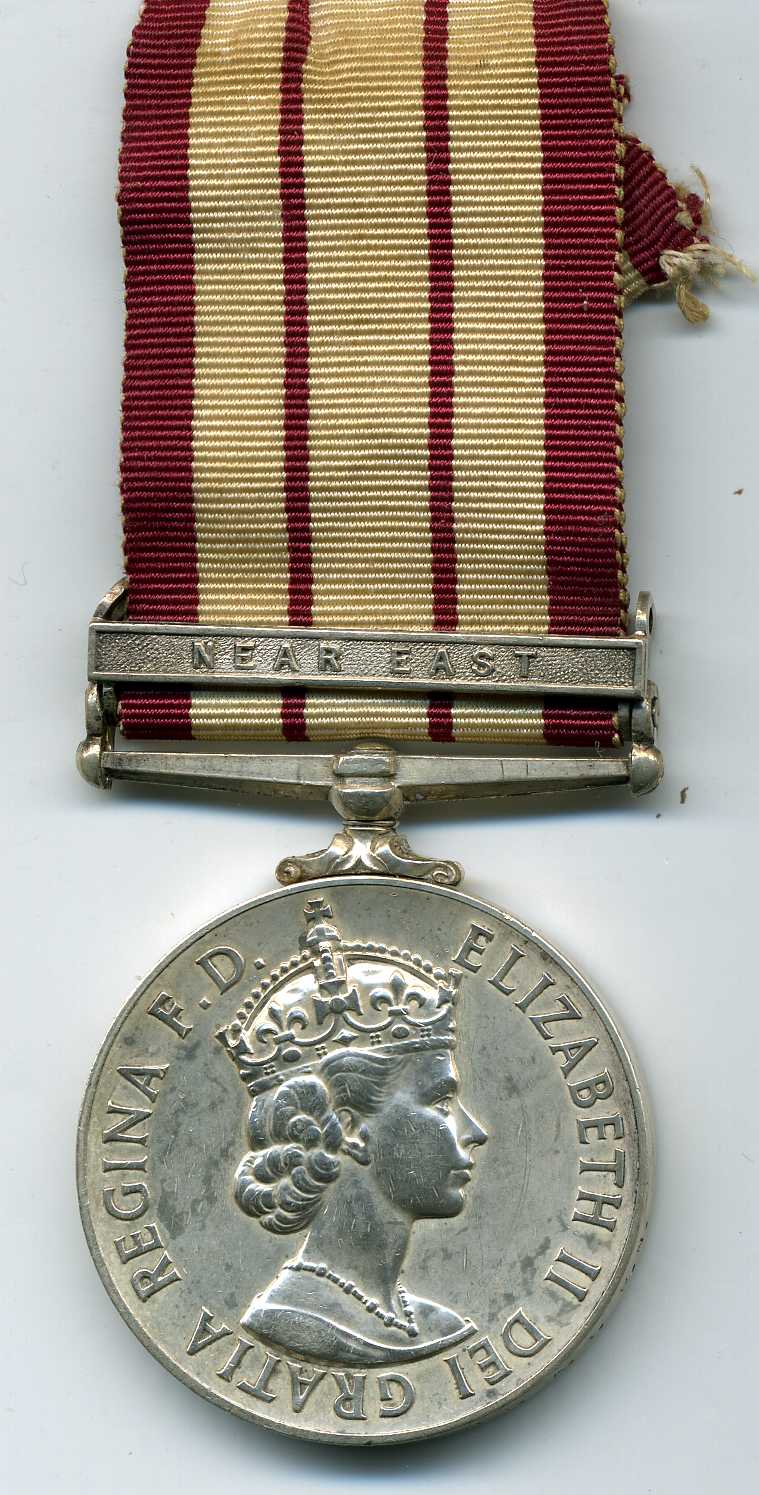 |
Naval General Service Medal (1915-62) with
clasp NEAR EAST for operations on the Suez Canal, 1956. Source:http://www.medals.me.uk |
| France | |
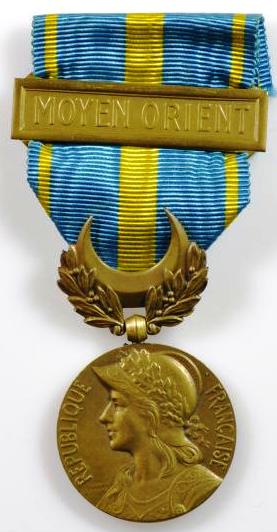 |
The Commemorative Medal for Operations in the
Middle East 1956
Reverse inscription: Medaille Commemorative des Operations du Moyen-Orient 1956. |
| Egypt | نوط انتصار |
 |
the Nuut al-Nasr / Victory Medal, awarded to commemorate the first anniversary of the foreign evacuation of Port Said (Egypt). The medal was presented to all members of the armed forces and to military students who were serving on 23 December 1958. Do you have a picture of this medal? We would like to publish it, please let us know. |
| New Zealand | |
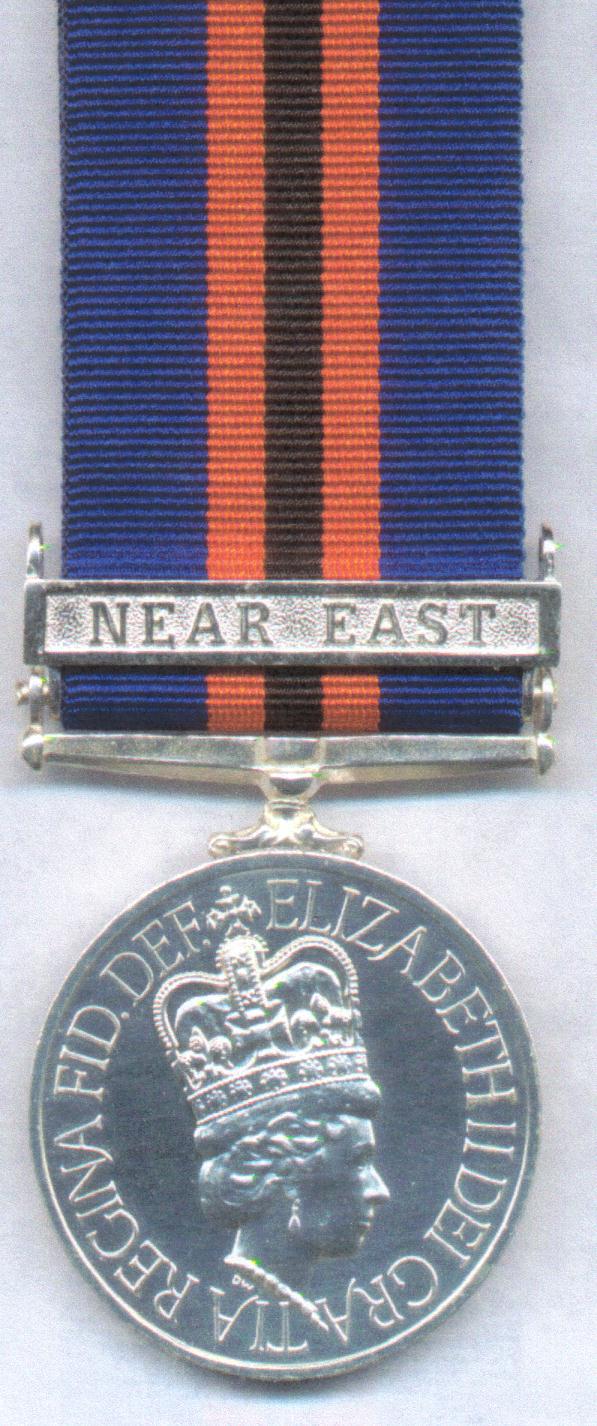 |
New Zealand General Service Medal with clasp
Near East Qualification for award: A member of the New Zealand Naval Forces qualifies for the award of the Medal and the Clasp who: 1 served for 1 day or more in ships engaged in operations off the Egyptian coast between 31 October and 22 December 1956; and 2 did not qualify for the award of the Naval General Service Medal (1915-62) with the Clasp "NEAR EAST". |
| United Nations | |
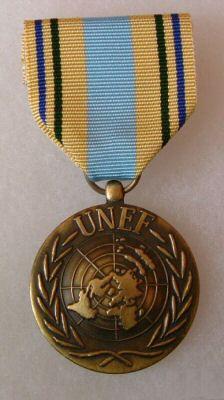 |
United Nations Emergency Force (UNEF) 1956-67 Medal The UN Assembly established the
first United Nations Emergency Force (UNEF). Its main functions were
to supervise the withdrawal of the three occupying forces and, after
the withdrawal was completed, to act as a buffer between the
Egyptian and Israeli forces and to provide impartial supervision of
the ceasefire. In the event, UNEF, stationed entirely on Egyptian
territory with the consent of the Government, patrolled the
Egypt-Israel armistice demarcation line and the international
frontier to the south of the Gaza Strip and brought relative quiet
to a long-troubled area. |