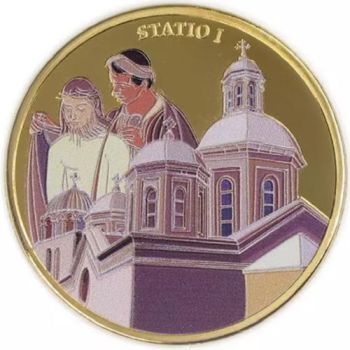
Statio I - Jesus is condemned to death
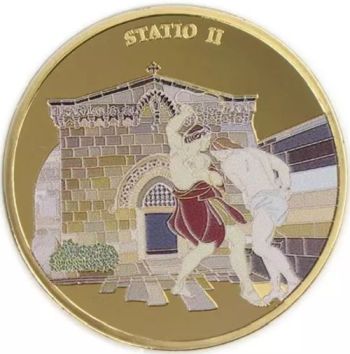
Statio II - Jesus carries his cross
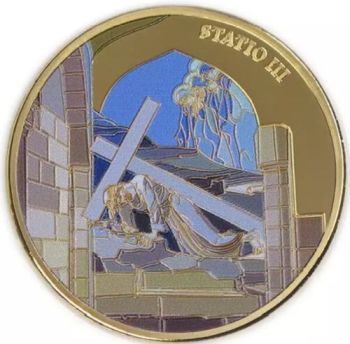
Statio III - Jesus falls the first time
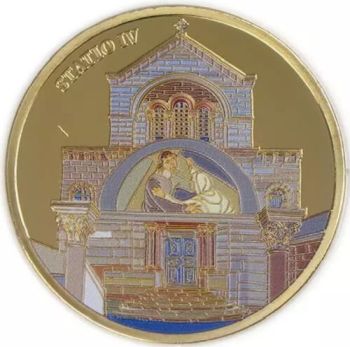
Statio IV - Jesus meets his mother
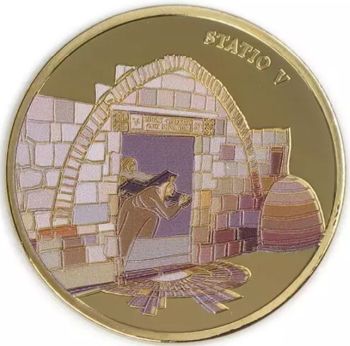
Statio V - Simon of Cyrene helps Jesus carry the cross
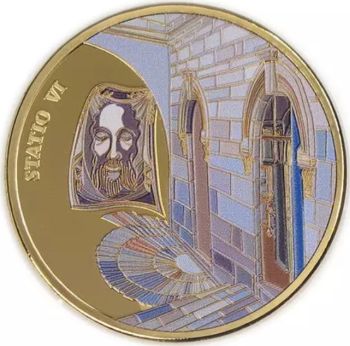
Statio VI - Veronica wipes the face of Jesus
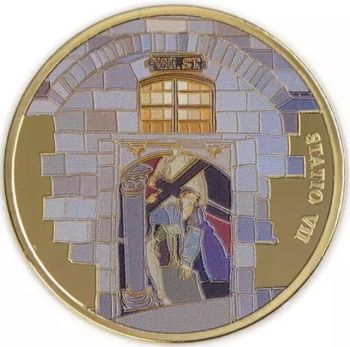
Statio VII - Jesus falls the second time
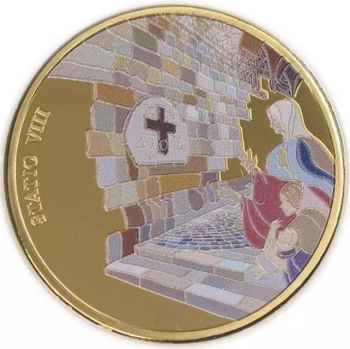
Statio VIII - Jesus meets the women of Jerusalem
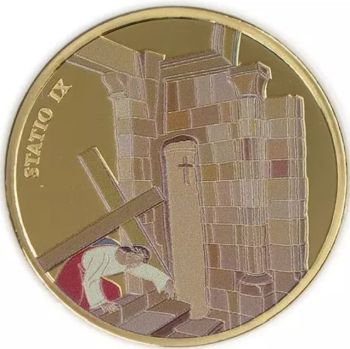
Statio IX - Jesus falls the third time
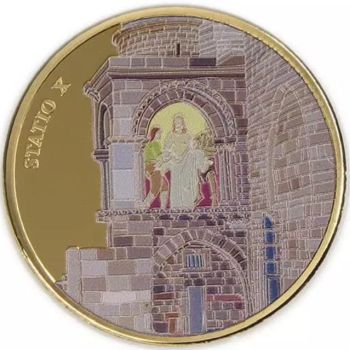
Statio X - Jesus is stripped of his garments
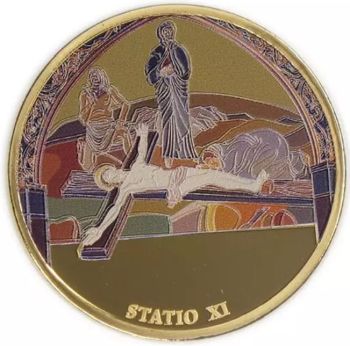
Statio XI - Crucifixion: Jesus is nailed to the cross
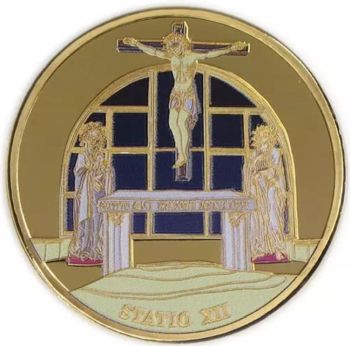
Statio XII - Jesus dies on the cross
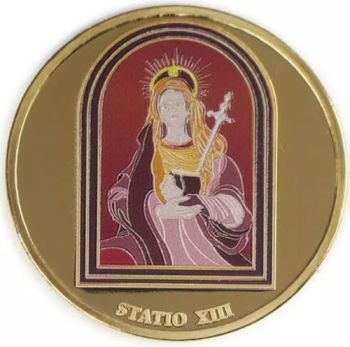
Statio XIII - Mary lamenting over Jesus' death
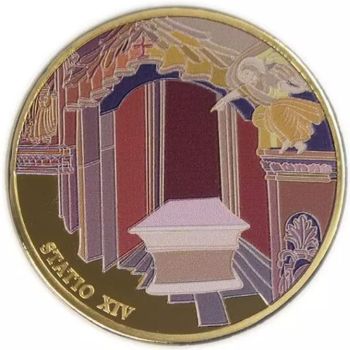
Statio XIV - Jesus is laid in the tomb

Reverse of the medals